


The ‘XR Energy’ project, a finalist at the 2025 Aragonese Building Awards
With around 1,000 attendees, the IV Aragón Building Gala brought together institutional representatives, professionals, and companies from the construction sector at the Zaragoza Conference Center
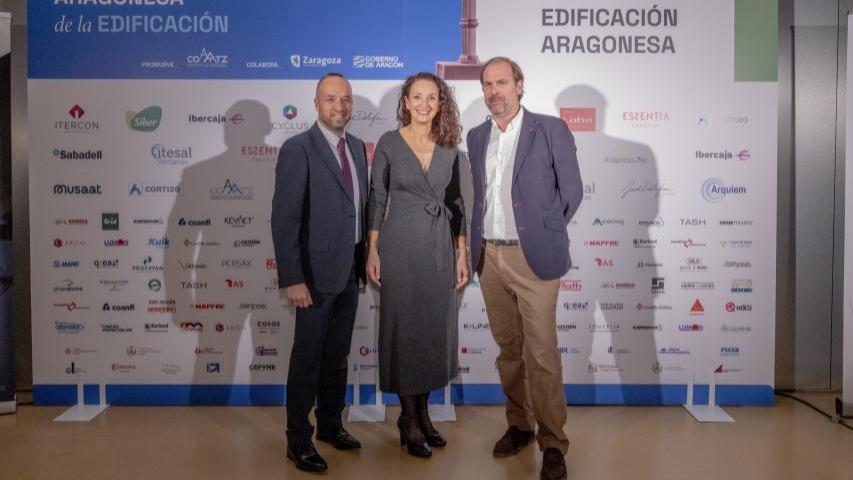
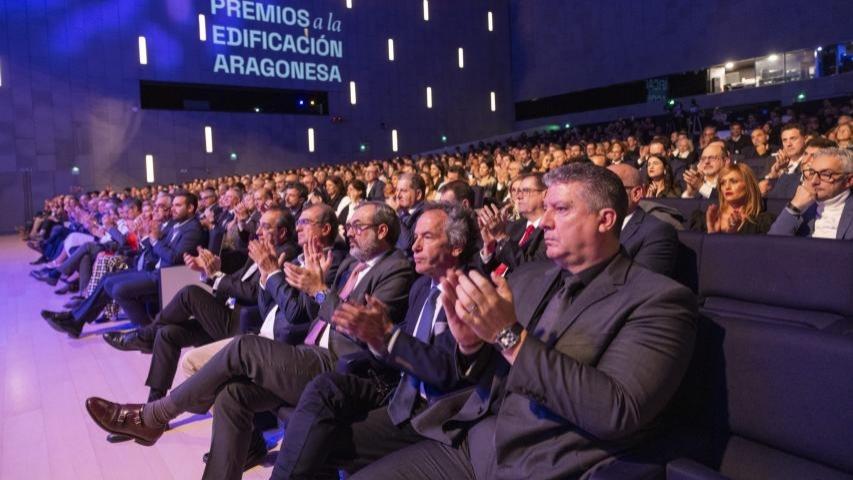
Fundación Laboral de la Construcción participated in this fourth edition on behalf of the international Project ‘XR Energy’, nominated for the final phase of the awards in the category “Best Innovation Project and/or Industrialized Construction System in the Construction Sector 2025”.
The event, held at the Zaragoza Conference Center, brought together approximately 1,000 attendees, including institutional representatives, professionals, and companies from the sector. Representing the joint entity were Ignacio Pamplona, manager of the Fundación Laboral in Aragón, and two trainers from the Zaragoza Training Center and members of the team behind this European initiative, Lourdes Carreras and Juan Francisco Lobaco.
Regional recognition, international impact
The Aragonese Building Awards have established themselves as a benchmark event for highlighting projects that drive transformation in the construction sector in the region. The nomination of the joint entity, together with Estudio Metro7 SLP, for the ‘XR Energy’ project, highlights its commitment to training and sustainability, as well as its work at both regional and international level to promote innovation and digitization in construction.
Training innovation with Extended Reality
The European initiative brings together leading entities in innovation, technology, and training from Spain, Germany, and Austria. All of them are working together to improve the qualifications of professionals at the national and European level, promoting the use of Extended Reality (XR) in classrooms.
This project, co-financed by the European Union's Erasmus+ programme, aims to boost the energy transition and improve the skills of students and workers in the sector by integrating XR-based teaching tools and materials. This is intended to respond to the growing need for qualified personnel to manage and optimize new energy systems, which are essential for moving towards a more efficient and sustainable construction model.
XR Energy develops advanced training tools that allow complex processes to be visualized and understood through immersive and interactive experiences, improving the effectiveness of technical learning and facilitating the acquisition of key skills. This is essential to address two of the most significant challenges facing the sector: the shortage of skilled workers and the lack of generational renewal.
At the same time, the innovative training resources created within the framework of this initiative contribute to renewing the image of the sector and awakening young people's interest in construction industry.
Accessible materials for integrating Extended Reality in the classroom
The project addresses the difficulties in accessing this content, which stem from high technological costs and the digital gap that exists in educational centers and SMEs. To overcome these difficulties, the consortium has developed accessible and adaptable teaching units that allow dynamic and interactive content to be incorporated into training courses to facilitate learning. More specifically, Lourdes Carreras and Juan Francisco Lobaco, together with professionals from Estudio Metro7 SLP, have created a series of interactive video tutorials that show how to use virtual and augmented reality to create practical learning scenarios applied to construction training.
For training centers and companies, this opens up new possibilities for conveying complex content in a clear way, and designing training processes with a practical focus thanks to new XR technologies.
Practical sessions with students
In the framework of the “XR Energy” project, students in the Intermediate and Advanced Vocational Training courses at the Villanueva de Gállego Vocational Training Centre were able to test the XR-based resources developed by the teaching staff of the Fundación Laboral de la Construcción de Aragón, giving a positive assessment of their use and implementation.

The XR Energy project is co-funded by the European Union's Erasmus+ programme. This publication reflects the views only of the author, and the Commission cannot be held responsible for any use which may be made of the information contained therein.


